
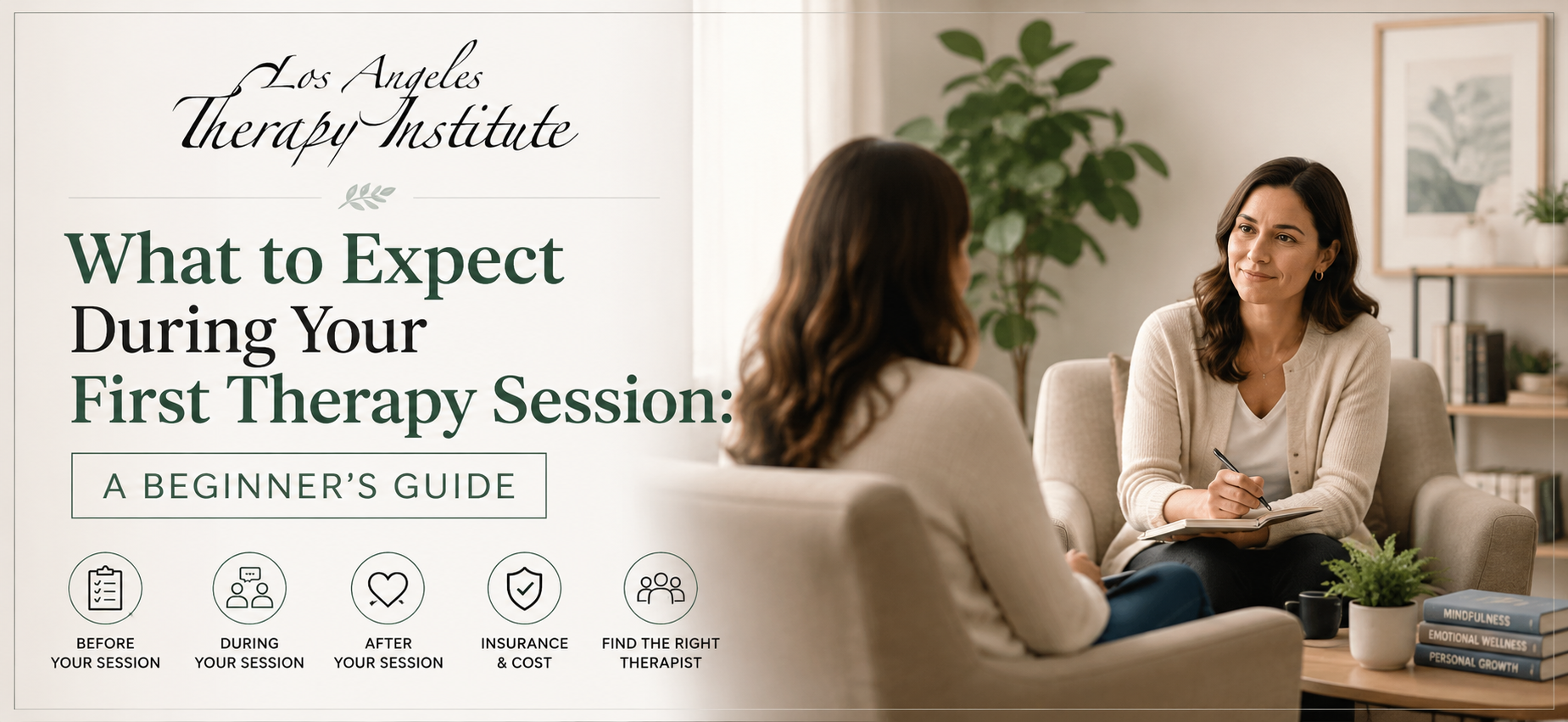
Most people put off therapy for months, sometimes years, because they don’t know what the first appointment actually looks like. They imagine lying on a couch talking about childhood trauma within the first ten minutes. That’s not what happens.
A first therapy session is closer to a structured conversation than a confession. Your therapist is gathering context: what brought you in, what you’re hoping changes, and whether their approach fits your situation. It’s also your chance to evaluate them.
At Los Angeles Therapy Institute, we built our intake process around one idea: mental health support shouldn’t feel intimidating or exclusive. This guide breaks down exactly what to expect, step by step, so the unknowns stop being a reason to wait.
Objective: Walk first time therapy clients through exactly what happens before, during, and after their first therapy session at Los Angeles Therapy Institute, so they can show up informed instead of anxious.
Key Takeaways
- Your first therapy session is mostly about information gathering, not deep emotional work
- Paperwork and insurance verification usually happen before you ever meet your therapist
- A good fit matters more than credentials alone when choosing a therapist
- Couples and individuals go through different intake processes
- Most clients need three to four sessions before therapy starts to feel natural
- Los Angeles Therapy Institute offers a 30 minute free consultation before you commit to ongoing sessions
What Happens Before Your First Therapy Session?
You’ll fill out intake paperwork and confirm insurance details before you ever sit down with a therapist. This happens through a secure client portal, usually 24 to 48 hours ahead of your appointment.
The paperwork covers your basic health history, current concerns, and any medications you’re taking. It takes about fifteen minutes. Skipping it just means spending session time on logistics instead of the actual work.
We also recommend starting with our 30 Minute Free Consultation before booking a full session. It’s a low pressure way to ask questions about approach, availability, and fit without committing to anything yet.
If you’re using insurance, our team verifies your accepted insurance plan ahead of time. That way you know your copay before you walk in, not after.
What Actually Happens During Your First Therapy Session?
Your first therapy session runs 45 to 60 minutes and focuses on assessment, not treatment. Your therapist will ask about your history, current stressors, and what you want out of therapy.
Expect questions like:
- What brought you in right now, as opposed to six months ago or six months from now?
- Have you been in therapy before, and what worked or didn’t?
- Are there specific symptoms, patterns, or events you want to focus on?
- What does progress look like to you?
There’s no obligation to share everything at once. Therapists are trained to work at your pace. Many clients spend the first therapy session mostly listening and answering direct questions rather than leading the conversation themselves.
By the end, you and your therapist should have a rough sense of a treatment plan: how often you’ll meet, which approach makes sense (CBT, DBT, EMDR, or another method), and what the next few sessions will focus on.
How Do I Find the Best Therapist in LA for My Needs?
The best therapist in LA for you isn’t necessarily the one with the most credentials. It’s the one whose specialty and style match what you’re dealing with. Fit predicts outcomes more reliably than years of experience alone.
Start by narrowing in on your specialty. Someone great at treating OCD may not be the right fit for couples work. Our therapists at Los Angeles Therapy Institute are evaluated on clinical expertise and on how they actually work with clients day to day, since both affect results.
A few practical filters:
- Does their specialty match your concern (anxiety, trauma, OCD, relationship issues)?
- Do they take your insurance, or offer a rate you can sustain long term?
- Is their location and availability realistic for your schedule?
- Did the free consultation feel comfortable, rushed, or generic?
If the first therapist you meet isn’t the right fit, that’s normal. Switching therapists after one or two sessions is common and not something to feel guilty about.
What If I’m Looking for Relationship Therapy in Los Angeles?
Relationship therapy in Los Angeles follows a different intake structure than individual therapy. Both partners typically attend the first session together, then may split into individual check-ins depending on the approach.
Our couples therapy sessions often use Gottman Institute oriented methods, which rely on structured assessments to identify communication patterns before jumping into problem solving. Expect a questionnaire early on covering conflict style, shared history, and specific friction points.
One real scenario we see often: a couple comes in after a specific incident, thinking they need to “fix” that one issue. By the end of the first session, it’s usually clear the presenting problem is a symptom of a longer running pattern, like mismatched expectations around finances or family involvement. That reframe alone changes how the next sessions get structured.
How Long Does It Take to Feel Comfortable in Therapy?
Most clients report feeling noticeably more comfortable by their third or fourth session. The first therapy session is rarely where trust fully forms, and that’s expected, not a red flag.
Comfort builds through repetition. Your therapist learns your communication style, and you learn theirs. Sessions two and three usually move faster because the groundwork from session one is already in place.
If you still feel disconnected after four or five sessions, say so directly. A good therapist will either adjust their approach or help you find someone better suited to how you process things.
What Should I Bring to My First Session?
| Bring This | Why It Matters |
| Insurance card and ID | Speeds up check in and billing |
| List of current medications | Relevant for treatment planning, especially with TMS or medication management |
| Notes on specific concerns | Keeps you from forgetting key points once you’re in the room |
| Questions about approach or credentials | This is a two way evaluation, not just an intake |
| Partner (for couples sessions) | Most relationship therapy intakes start jointly |
You don’t need a script. Bullet points are enough. Therapists are used to guiding the conversation when clients go blank.
What Does a First Therapy Session Cost, and Is It Covered?
Cost depends on whether you’re using insurance or paying out of pocket. Los Angeles Therapy Institute accepts a range of major providers, which covers most or all of the session cost for many clients.
| Insurance Provider | Typically Accepted |
| Aetna | Yes |
| Cigna | Yes |
| UnitedHealthcare | Yes |
| Optum | Yes |
| Health Net | Yes |
| Anthem | Yes |
| Medi-Cal | Yes, including TMS coverage |
| Molina Healthcare | Yes |
Medi-Cal recently approved coverage for TMS (Transcranial Magnetic Stimulation), which opened that treatment up to a much wider group of patients who couldn’t previously afford it. If you’re unsure what your plan covers, our team verifies benefits before your first appointment so there’s no surprise bill.
For clients without insurance or with high deductibles, the 30 Minute Free Consultation is a no-cost way to meet a therapist and confirm fit before paying for a full session.
Making the Call
The hardest part of therapy is usually the first phone call, not the first session itself. Once you’re in the room, it’s a conversation, not an interrogation.
If you’ve been putting off finding the best therapist in LA for your situation, start with the free consultation. It removes the guesswork before you commit to anything, and our team at Los Angeles Therapy Institute will help match you with the right specialist from the start.
Book your 30 Minute Free Consultation or call (310) 857-4946.
Frequently Asked Questions
Do I have to talk about everything in the first session?
No. You control the pace. Most therapists ask direct questions but won’t push you past what you’re ready to share.
Can I request a specific therapist by specialty?
Yes. Tell our intake team what you’re dealing with, whether that’s anxiety, couples conflict, or OCD, and they’ll match you with someone who specializes in it.
What if I don't click with my first therapist?
That happens more than people think. You can request a different therapist without any awkward conversation. Fit matters more than sticking it out.
Is the free consultation actually free, or is there a catch?
It’s genuinely free, 30 minutes, no obligation. It exists specifically so you’re not paying to figure out if someone’s a good match.
How is a couples intake different from an individual one?
Couples usually start together, often using a Gottman oriented assessment to map communication patterns before splitting into individual sessions if needed.