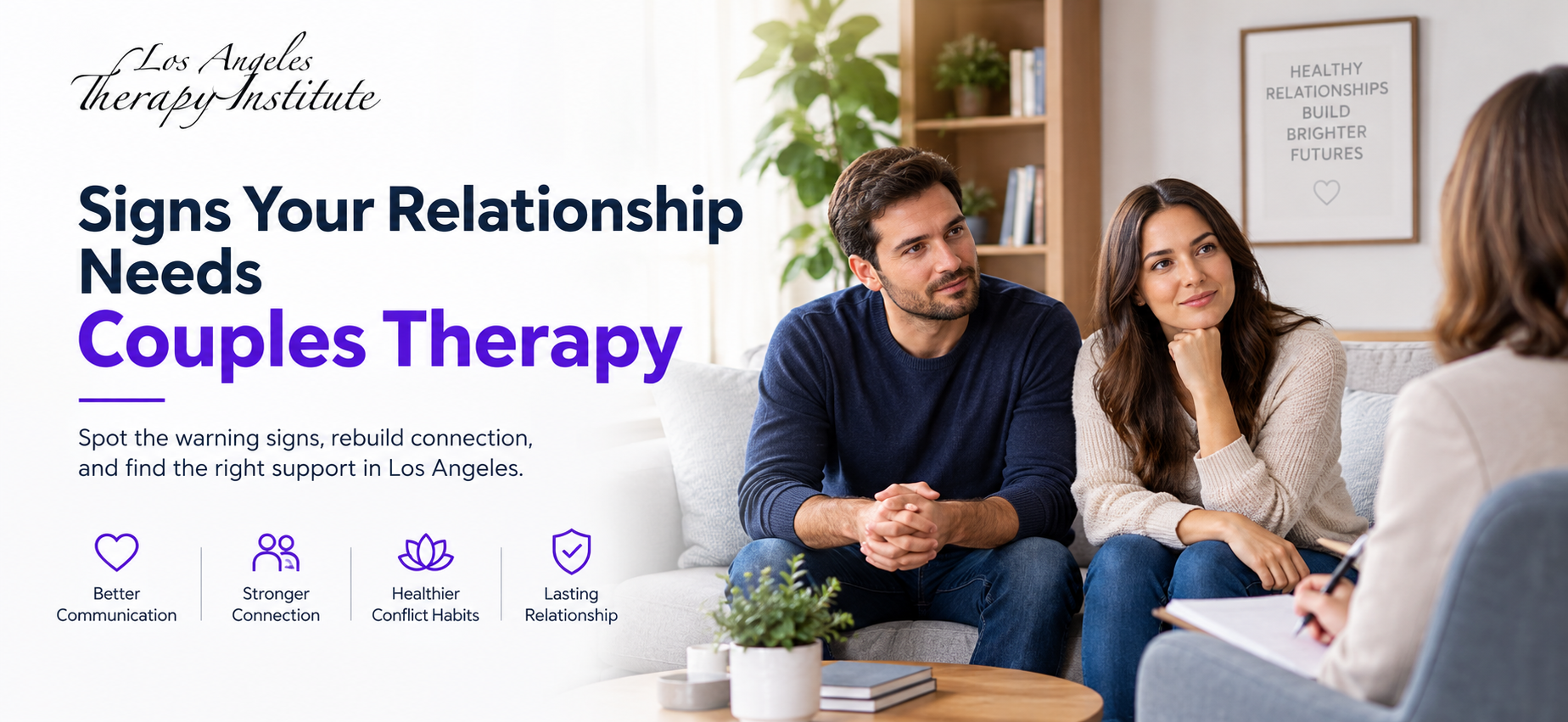
You used to talk for hours. Now most of your conversations are about schedules, chores, and who forgot to take out the trash. Or maybe you talk plenty, but every conversation ends in the same fight. You love each other, and still, you wonder if something is quietly slipping away.
That feeling is more common than most couples admit. Many wait years before asking for help, often until the hurt runs deep. The good news is that you don’t have to hit a breaking point to benefit from a little guidance.
If you’re searching for couples therapy in Los Angeles, this guide will help you spot the signs, understand how therapy works, and figure out your next step. At Los Angeles Therapy Institute, we meet couples where they are, whether you’re trying to rebuild trust or just want to feel close again.
Objective: Not sure if your relationship needs outside support? This blog will help you figure that out, understand how couples therapy works, and find your next step toward a therapist in the Los Angeles area.
Table of Contents
Key Takeaways
- Frequent conflict isn’t the only sign. Silence, distance, and feeling like roommates matter just as much.
- Researchers have found that contempt (eye-rolling, mocking, put-downs), constant criticism, getting defensive, and shutting down during conflict are strongly linked to relationships falling apart.
- Couples therapy works for relationships that feel stuck or distant, not just ones on the brink. The earlier you start, the easier it usually is to change course.
- The Gottman method for couples therapy is a research-based approach that builds friendship, trust, and healthier conflict habits.
- Both partners don’t have to be equally ready. A willingness to try is enough to begin.
What Are the Signs Your Relationship Needs Couples Therapy?
Your relationship may benefit from therapy if the same problems keep coming back, or if you feel more like strangers than partners. One rough week doesn’t mean trouble, but a lasting pattern is worth paying attention to.
Here are the 8 most common signs:
- You keep having the same fight. The topic changes (money, chores, in-laws), but the argument feels identical and never resolves.
- Communication has broken down. You avoid some topics, or you talk and don’t feel heard.
- You feel like roommates. The warmth, humor, and curiosity about each other have faded.
- Trust has been hurt. This might involve infidelity, secrets, or broken promises.
- Intimacy has changed. Physical or emotional closeness has dropped, and neither of you knows how to bring it up.
- One of you is shutting down. Silence, withdrawal, and walking away have become the usual response to stress.
- Resentment is building. Small things trigger big reactions because of old, unspoken hurts.
- Big life changes are straining you. A new baby, a move, job loss, illness, or blending families can shake even strong couples.
Is it normal to argue in a healthy relationship?
Yes. Every couple argues, and disagreements aren’t a sign of failure. What matters is how you fight, and whether you can repair things afterward.
What Are the Warning Signs Researchers Watch For?
Psychologists John and Julie Gottman identified four patterns they call the Four Horsemen, which tend to predict relationship trouble when they become habits. If you catch them early enough, you can change course.
- Criticism: attacking your partner’s character instead of raising a specific concern (“You never help” versus “I felt overwhelmed tonight”)
- Contempt: sarcasm, eye-rolling, mockery or name-calling, which the Gottmans found to be the most damaging of the four
- Defensive: making excuses, turning the blame back around
- Stonewalling: shutting down and refusing to engage
Occasional slips are human. The concern is when they show up in most of your conflicts.
What Is the Gottman Method for Couples Therapy?
The Gottman method for couples therapy is a structured, research-based form of couples therapy that helps partners strengthen friendship, manage conflict, and build shared meaning. It grew out of decades of studying how real couples interact.
A therapist using this approach typically focuses on:
- Assessment: an early look at your strengths and trouble spots, often with questionnaires and individual conversations
- Love Maps: getting to know each other’s inner world again, including stresses, hopes, and dreams
- Fondness and admiration: rebuilding appreciation to counter negativity
- Healthy conflict: learning to soften how you raise problems and to repair after a fight
- Shared meaning: talking about the life and values you want to build together
One very popular idea from the research is that stable couples tend to have far more positive than negative interactions, often described as about five to one during conflict. It’s a helpful guide, not a rigid rule.
Does Couples Therapy Actually Work?
For a lot of couples, yes, especially when both partners are willing to take part and don’t wait too long to start. Studies on approaches like Emotionally Focused Therapy and the Gottman Method show that most couples end up happier in their relationship afterward. That said, every couple is different, and results are not guaranteed. No honest therapist can promise how things will turn out.
Therapy tends to work best when you:
- Attend consistently and complete the exercises between sessions
- Are honest about what’s hard
- Focus on the pattern between you, not on winning
What Happens in the First Couples Therapy Session?
Your first session is mostly about getting acquainted, not about assigning blame. The therapist will ask about your history, what brought you in, and what you hope will change.
Expect this general flow:
- You each share your view of the problem
- The therapist learns about your history and strengths
- You set goals together
- You agree on a plan, including how often to meet
A good therapist stays neutral and makes sure both of you feel respected.
How Do You Find the Right Couples Therapist Near You?
Look for a licensed therapist who has real training in couples work. But don’t stop at credentials. If one or both of you don’t feel comfortable with them, it’s okay to keep looking. Fit matters just as much.
Here is what to check:
- Licensure: a licensed marriage and family therapist (LMFT), psychologist, or similar
- Training: experience with approaches such as the Gottman Method or emotionally focused therapy
- Style: someone who is structured, neutral, and kind
- Logistics: location, availability, and whether in-person or online sessions suit you
If you’re looking for couples therapy in Santa Monica or comparing providers for couples therapy in Beverly Hills, CA, consider the therapist’s location, experience, and available appointment options. Los Angeles Therapy Institute is located in Santa Monica and offers couples therapy using approaches such as the Gottman Method, attachment theory, CBT, and DBT. If you’re searching for a couples therapist in Orange County, contact the practice to confirm whether telehealth appointments are available for your location.
Take the First Step Towards a Healthier Relationship
You don’t have to wait until every conversation turns into an argument or the distance between you feels permanent. Noticing the patterns that are hurting your relationship is often the first step toward a more honest conversation about what needs to change.
At Los Angeles Therapy Institute, couples can talk through what’s going on and explore approaches that fit their needs, including the Gottman Method, attachment theory, CBT, and DBT.
Ready to talk about what you want for your relationship? Contact us today to ask about couples therapy and set up a consultation.
Frequently Asked Questions
How do I know if we need couples therapy or just time?
If problems last for months, repeat themselves, or leave you feeling disconnected, therapy is worth considering. Time alone rarely fixes patterns like contempt or avoidance.
What if my partner refuses to go?
You can still begin on your own. Individual sessions can help you change your side of the dynamic, and your partner may feel ready to join later.
How long does couples therapy take?
That depends on your goals. Many couples see progress within a few months, while deeper issues like trust repair can take longer.
Is online couples therapy as good as in-person?
For many couples, yes. Research on online therapy is encouraging, and it can be more convenient. Some people prefer in-person sessions, so choose what feels right.
Is couples therapy only for married couples?
No. Dating, engaged, and long-term partners can all benefit, and so can couples of any background or orientation.