
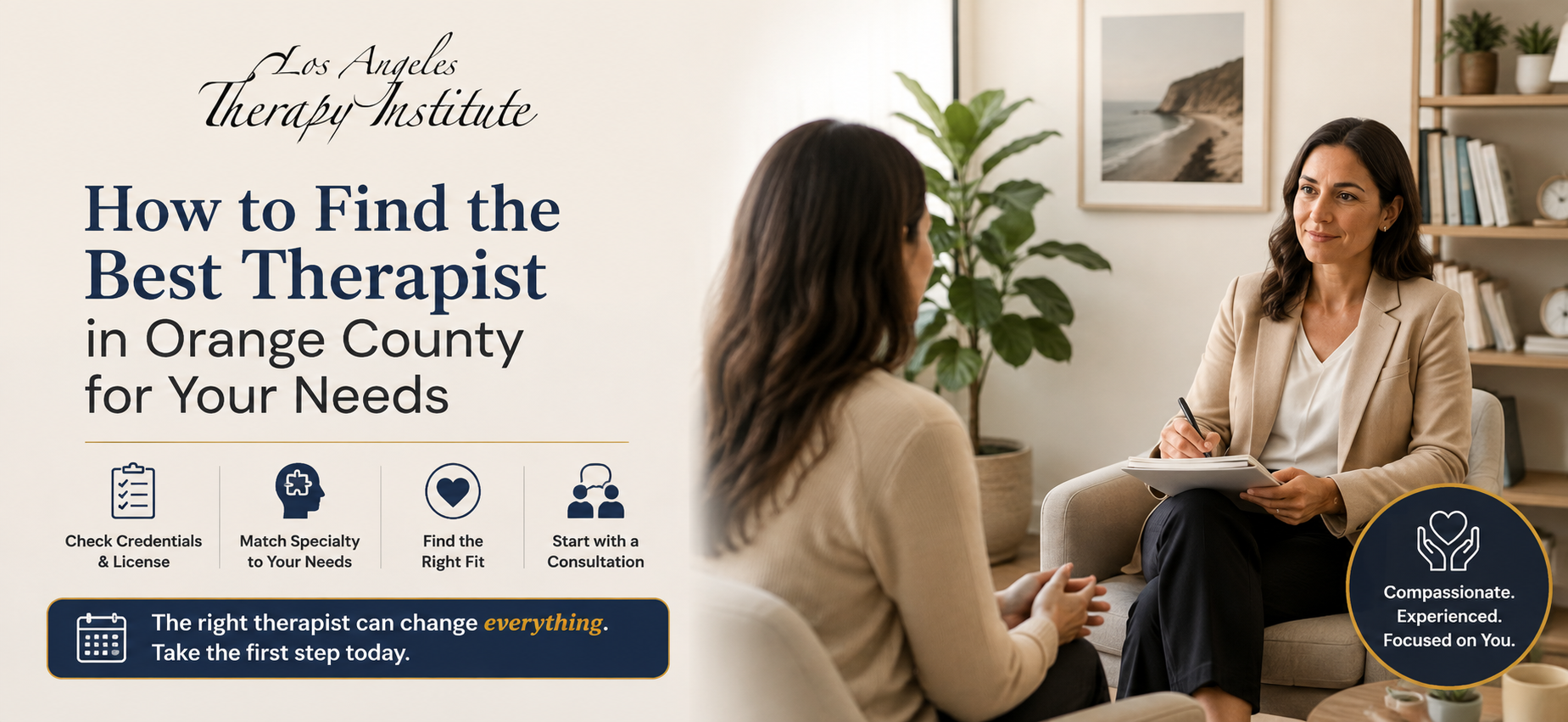
You search “best therapist in Orange County,” and forty tabs later, you’re no closer to booking anyone. Every profile says compassionate, experienced, client-centered. None of it tells you if this is the person who’ll actually help.
That gap between marketing language and real fit is the reason so many people give up on therapy before they even start. It’s also fixable, once you know what to actually check.
This guide breaks down what separates a good match from a wasted first session, and how to shortcut the search.
Objective: This blog walks you through exactly how to find the best therapist in Orange County for your specific situation, whether that’s anxiety, a relationship struggle, or something you can’t quite name yet.
Key Takeaways
- The best therapist in Orange County for you depends on three things: their license, their specialty, and how you feel talking to them, not just their star rating.
- A short vetting checklist, license verification, specialty match, and a fit check through a consultation filter out most bad matches before your first paid session.
- A couples therapist Orange County residents trust should be trained in a specific model, like the Gottman Method, not just “relationship counseling” in general.
- Most reputable practices, including Los Angeles Therapy Institute, offer a free consultation before you commit, which is the fastest way to test fit.
Why Finding the Right Therapist Is Harder Than It Sounds
Most directories list credentials, not compatibility, which is why searches feel exhausting even with dozens of results.
Orange County has a dense concentration of licensed therapists, from solo practitioners to larger group practices. That’s good for choice. It’s bad for decision fatigue, since almost every listing reads the same way on paper.
The real differentiators- specialty training, treatment approach, and how a therapist actually talks to clients- rarely show up until you’re already in the room.
What Makes Someone the Best Therapist in Orange County for You?
The right therapist matches your specific concern, uses an approach with evidence behind it, and makes you feel heard within the first session or two.
There’s no single best therapist in Orange County for everyone. Someone great for processing trauma may not be the right fit for premarital counseling. A therapist skilled in CBT for anxiety isn’t automatically equipped for teen behavioral issues.
Fit also isn’t just clinical. If a therapist’s communication style feels cold or rushed, that gets in the way of progress, regardless of their credentials.
The Vetting Checklist: License, Specialty, Fit
Three checks, done before you book, save you from months of trial and error.
1. License
Confirm the therapist holds an active license, LMFT, LCSW, PsyD, or PhD, through the California Board of Behavioral Sciences or Board of Psychology. A quick lookup takes two minutes and confirms they’re legally qualified to practice in California.
2. Specialty
Match their listed specialty to your actual concern. Someone trained in trauma and PTSD is a different fit than someone focused on parenting coaching, even if both are licensed therapists. At Los Angeles Therapy Institute, therapists list specific specialties like CBT, DBT, EMDR, and Gottman-oriented couples work, which makes this step easier to check upfront.
3. Fit
Book a short consultation before committing to ongoing sessions. Notice whether you feel comfortable being honest with this person. That instinct matters more than most people give it credit for.
A therapist can check every box on paper and still not be right for you. The checklist narrows the field. The consultation confirms the match.
What to Ask During a Consultation
A short call before your first real session tells you more than any bio page will.
- What’s your experience with [your specific issue]? A direct answer, not a vague one, is a good sign.
- What approach do you use, and why? They should be able to explain it in plain language, not just name-drop a method.
- What does a typical course of treatment look like? This gives you a sense of pacing and what progress might actually look like.
- Do you accept my insurance, or offer a sliding scale? Cost derails more therapy relationships than almost anything else, so get this settled early.
Los Angeles Therapy Institute offers a free 30-minute consultation for exactly this reason. It’s built to answer these questions before any financial commitment.
Finding a Couples Therapist in Orange County
Couples therapy requires a different skill set than individual therapy, so the vetting process shifts slightly.
Look for a couples therapist Orange County couples specifically recommend, not just any licensed therapist willing to see two people at once. Training in a structured model, like the Gottman Method, means the therapist is working from research-backed techniques rather than general conversation facilitation.
Ask both partners to weigh in after the consultation. One partner feeling comfortable isn’t enough. Therapy works better when both people trust the process and the person guiding it.
Couples therapy at Los Angeles Therapy Institute is grounded in this kind of structured, evidence-based approach rather than open-ended talk sessions.
Beyond Orange County: What If You’re Nearby?
If you’re outside Orange County proper, the same vetting process still applies, just with a different office.
Los Angeles Therapy Institute operates locations across Southern California, including Orange County (1310 W. Stewart Dr., Orange, CA), Santa Monica, West LA, and Beverly Hills. If Orange isn’t convenient, a nearby location with the same clinical standards and specialty list is often just as accessible.
Telehealth also closes this gap for many clients, especially those balancing work schedules or mobility limits. Ask about virtual session availability during your consultation if commute time is a barrier.
Conclusion
The search for the best therapist in Orange County doesn’t have to mean forty open tabs and a guessing game. Check the license, match the specialty, and trust what you feel in the first conversation.
Los Angeles Therapy Institute offers a free consultation at their Orange County location, so you can test the fit before committing to anything. Book your free consultation and take the first real step forward.
Frequently Asked Questions
How do I know if a therapist in Orange County actually takes my insurance?
Ask directly during your consultation, and confirm in writing before your first paid session. Los Angeles Therapy Institute accepts major providers including Aetna, Cigna, UnitedHealthcare, Optum, and Medi-Cal.
What's the difference between a psychologist and a therapist?
A psychologist holds a doctoral degree (PsyD or PhD) and can conduct psychological testing. A licensed therapist (LMFT or LCSW) provides talk therapy and is trained in specific treatment models, without the testing credential.
How long does it usually take to find the right fit?
Most people know within one or two sessions whether a therapist feels right. If it’s not clicking by session three, it’s reasonable to ask for a different therapist within the same practice.
Can I switch therapists if the first one isn't working out?
Yes, and it’s common. A good practice will help you transition to someone else on their team rather than treating it as a failed match.
Is online therapy as effective as in-person sessions in Orange County?
For many concerns, yes. Research shows telehealth therapy produces comparable outcomes to in-person sessions for anxiety, depression, and many relationship issues, though some people prefer in-person for deeper trauma work.
Mental Health Information Disclaimer
The information provided in this blog is for educational purposes only and is not a substitute for professional mental health advice, diagnosis, or treatment. Please consult a qualified mental health professional for advice regarding your individual needs.