
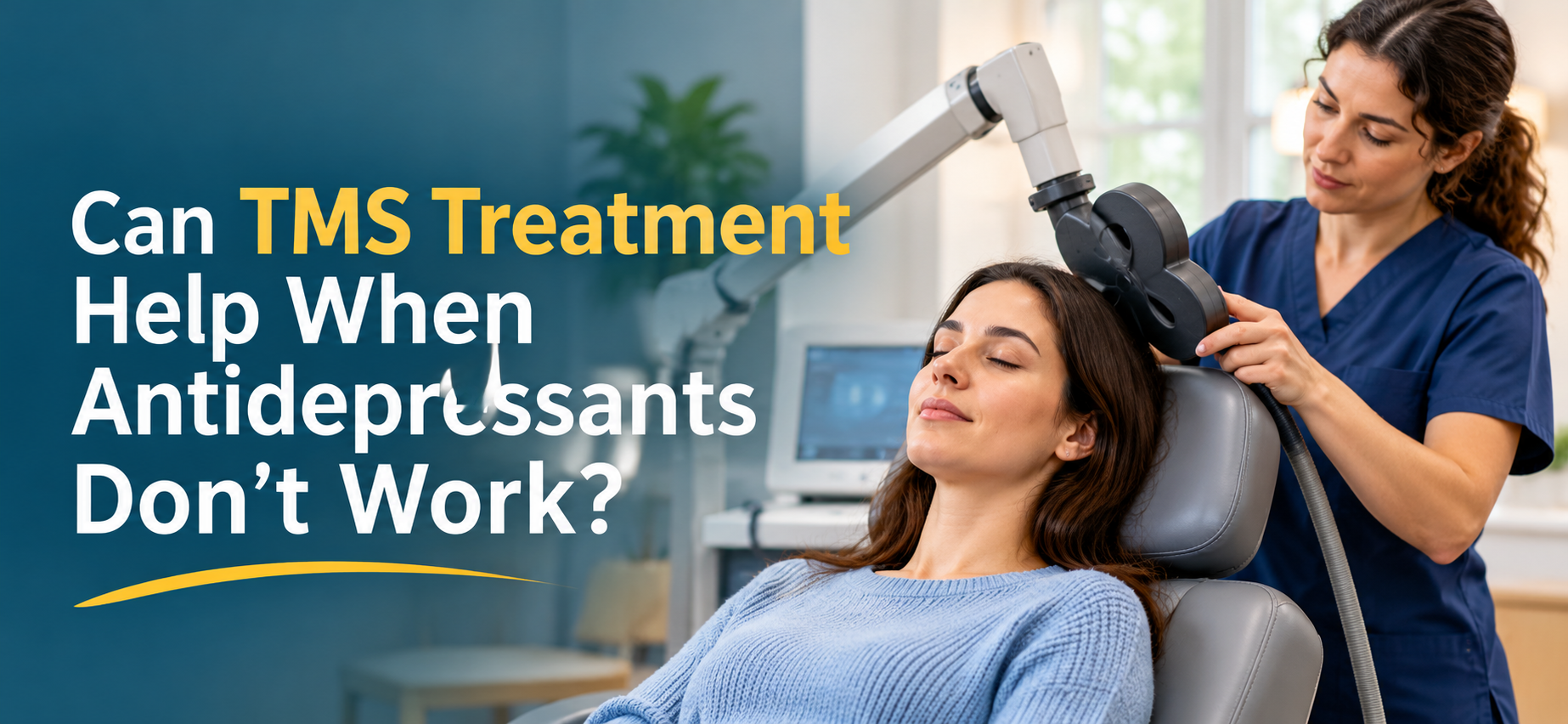
Antidepressants help many people, but they do not help everyone. If you have taken your medication as prescribed, kept your follow-up visits, and still feel low, worn out, or stuck, it is reasonable to ask what else is out there. One option some people explore is TMS, a non-invasive treatment that uses magnetic pulses to stimulate parts of the brain linked to mood.
If you are searching for TMS treatment Los Angeles providers offer, this guide covers what TMS therapy involves, who it may suit, what to expect from the first visit to the last session, and how talk therapy and your current care can fit around it.
Objective: This guide explains what TMS is, how it may help when medication falls short, who may be a good fit, what a course of treatment looks like, and what to think about before you start.
Table of Contents
Key Takeaways
- Antidepressants do not work the same way for everyone, and a lack of relief is a medical issue, not a personal failure.
- TMS is a non-invasive treatment that uses magnetic pulses to stimulate brain areas linked to mood regulation.
- Because TMS does not involve medication, it avoids many systemic side effects associated with antidepressants. Some people may still experience scalp discomfort or headaches.
- A typical course runs 4 to 6 weeks, and sessions do not require downtime afterwards.
- Some insurance plans cover TMS, but coverage is not automatic, so it helps to verify your benefits early.
Why Aren’t Antidepressants Helping Me Feel Better?
Antidepressants do not work equally well for every person, and sometimes they never provide full relief. Depression is complex, and brain chemistry is only one piece of it.
Here are some common reasons medication falls short:
- Individual differences. Two people can take the same medication and respond very differently.
- Side effects. Weight gain, sleepiness, or nausea can lead people to stop before the medication has had a fair chance.
- Trial and error. Finding the right drug and dose can take time, and it does not always happen on the first try.
- Other factors at play. Ongoing stress, poor sleep, trauma, or anxiety can keep symptoms going even when medication helps a little.
When several medications have not helped enough, doctors sometimes call it treatment-resistant depression. That label is not a verdict. It simply tells your care team that it may be time to consider other approaches. Never stop or change a prescription without talking to your prescriber first.
What Exactly Happens During TMS Treatment?
TMS stands for Transcranial Magnetic Stimulation. It is a non-invasive treatment that uses magnetic fields to stimulate nerve cells in areas of the brain involved in mood regulation.
During a session, a small coil rests against your scalp and delivers repetitive magnetic pulses. According to the institute’s TMS page, these pulses create small electrical currents that stimulate brain regions that tend to be underactive in depression. There is no surgery and no anesthesia. TMS does not involve taking medication during the procedure. However, it can be used alongside antidepressants when a provider recommends combining the treatments. The page also notes that TMS is FDA-cleared.
How Can TMS Help When Antidepressants Don’t Work?
TMS may help because it approaches depression from a different direction than medication does. Instead of changing chemistry throughout the body, it targets specific brain areas tied to mood.
Here is what makes it different:
- It is targeted. The stimulation focuses on regions involved in mood control, not the whole body.
- It does not add a drug. The institute’s TMS page points out that TMS avoids systemic side effects such as weight gain, nausea, or drowsiness that are common with antidepressants.
- It can still cause mild effects. Some people notice scalp discomfort or a headache, especially early in treatment.
- It does not interrupt your day. Patients can resume normal activities right after each session.
- It is aimed at people who have not responded to other treatments. The institute describes TMS as especially useful for people who have not found relief with conventional approaches.
No treatment works for everyone, and nobody can promise a specific result. TMS has helped many people, but responses differ. A consultation can help you understand what is realistic for your situation.
Could TMS Be the Right Option for You?
Most people start thinking about TMS after medication or other treatment hasn’t given them enough relief. Whether it fits you is up to a licensed provider, who will go over your history and check that it’s safe for you.
Ask about TMS if any of these sound like you:
- You have a depression diagnosis and have tried medication without lasting improvement.
- Side effects have made it hard to stay on your current medication.
- You want a treatment option that does not add another medication.
- You have already worked with a therapist and still feel stuck.
Some questions are worth raising before you begin:
| Topic | Why it matters |
| Medical history and safety screening | Your provider needs to know about any personal history of seizures or relevant neurological conditions. |
| Current medications | Share everything you take, including supplements. |
| Previous treatment | Insurers often ask for documented attempts with medication or therapy. |
| Your goals | Knowing what you hope to change helps your team plan care. |
TMS is not the right choice for everyone, and a careful medical evaluation always comes first.
What Should You Expect During TMS Treatment?
A typical course takes about 4 to 6 weeks, with a mapping session first. According to the institute’s website, full treatment usually includes 36 sessions plus one brain mapping session, and each session lasts around 30 to 60 minutes.
Here is how the process generally goes:
- Free consultation. You talk with the team about your history, symptoms, and goals.
- Records and medication review. You share recent medical records and list your current medications.
- Insurance check. The billing team investigates your benefits and explains what you may owe before treatment starts.
- Brain mapping. This first session locates the right treatment area for you.
- Regular sessions. You sit in a relaxed position while the coil delivers pulses. Most people feel a light tapping or clicking on the scalp.
- Back to your day. There is no recovery period, so most people go straight back to work, school, or errands.
Wearing comfortable clothes and eating a light meal beforehand can make the visit easier.
Is TMS Available for Teenagers?
Yes, in certain cases. The institute’s website states that NeuroStar Advanced Therapy has received FDA clearance as a first-line add-on treatment for adolescents aged 15 to 21 with major depressive disorder, and that the institute offers TMS treatment for adolescents.
That matters for families, because teen depression can be hard to treat and parents often want options. Families searching for therapy for teens in Beverly Hills can explore the institute’s Child and Adolescent Therapy services at its Beverly Hills office. The institute also offers TMS treatment for adolescents aged 15 to 21. Contact the team to confirm availability and location-specific arrangements.
Parents should remember that a depression diagnosis comes from a licensed professional, not from a blog post. If your teen seems withdrawn, hopeless, or unlike themselves for weeks, a conversation with a provider is a good first step.
Will Your Insurance Help Pay for TMS?
Some major insurance plans cover TMS when medical necessity and plan-specific eligibility requirements are met. Coverage is not automatic, so verify your benefits before starting treatment.
The institute’s website lists several insurers that cover TMS, including Aetna, Cigna, Blue Cross Blue Shield, Blue Shield of California (Magellan), Anthem Blue Cross, and Medicare. The institute also accepts Medi-Cal for eligible TMS clients at its Ocean Park Boulevard office in Santa Monica. Contact the team to confirm eligibility and location-specific availability.
Requirements differ by insurer, but the institute’s page lists some criteria they may look for:
- A qualifying diagnosis
- Documented attempts to treat the condition with medication
- A history of treatment or counselling with licensed therapists
- Medical history and safety screening, including any personal history of seizures or relevant neurological conditions
Your provider reviews your individual eligibility, and your insurer makes its own coverage decision. For people using insurance, the institute’s page says the cost per session typically ranges from about $10 to $70, depending on the plan. Treat that as an approximate out-of-pocket range, not a guaranteed price, since deductibles and copays may apply. The team describes a benefits investigation and a pre-treatment estimate, though an estimate does not guarantee benefits. For details on accepted plans, you can visit the institute’s insurance page or ask during your consultation.
Can Talk Therapy Support TMS?
Yes. Often TMS is part of a larger plan, and therapy can help with the thoughts, habits and stress that depression leaves behind.
The institute offers therapy for depression and anxiety, which includes approaches such as cognitive behavioural therapy and mindfulness-based work. For people who struggle with intense emotions alongside anxiety, dialectical behaviour therapy for anxiety may also be worth exploring. The institute’s DBT page describes DBT as a skills-based approach built around mindfulness, distress tolerance, interpersonal effectiveness, and emotional regulation. It is not automatically the right fit for every person with anxiety, so a therapist can help you decide.
Combining skill-building with medical treatment can give you tools to use long after sessions end. If you want to know how quickly people may notice changes, the institute’s post on how long TMS therapy takes to work goes into more detail.
How Do You Choose the Right Provider?
Look for licensed professionals who explain their approach clearly, answer your questions, and take your full history seriously. Rankings and slogans tell you far less than a real conversation does.
TMS is a specialised treatment, so the person overseeing it matters. When choosing a TMS provider, ask who oversees treatment, what experience the clinical team has with TMS, how progress is monitored, and how the plan will be coordinated with your existing mental health care.
When comparing providers, whether you’re looking for the best therapists in Los Angeles or the best therapist in Orange County, consider asking:
- What experience do you have treating depression that has not responded to medication?
- How will my insurance be handled?
- How do you coordinate TMS with therapy or other care?
- What does a typical week of treatment look like?
- Which locations and appointment formats are available?
Los Angeles Therapy Institute has a team page where you can read about its clinicians, including its TMS physicians, along with an Orange County office in addition to its Los Angeles area locations. It also offers a free consultation, which gives you a chance to see whether the team feels like the right fit.
Final Thoughts
When an antidepressant does not help enough, it can feel like the end of the road. It usually is not. TMS offers a non-drug option that targets the brain areas tied to mood, and for many people it opens a new path forward. It is not a cure-all, and the right decision depends on your history, your goals, and your provider’s guidance.
If you would like to learn whether TMS makes sense for you or someone you love, Los Angeles Therapy Institute offers a free consultation. It is a simple way to ask questions, review your options, and take the next step at your own pace.
Frequently Asked Questions
Does TMS hurt?
Most people say it does not. You may feel a light tapping or clicking on your scalp, which the institute describes as generally well tolerated. Some people notice mild scalp discomfort or a headache, and you can usually return to normal activities afterwards.
How long does a TMS course take?
A typical course lasts about 4 to 6 weeks. The institute’s website says it usually involves 36 sessions plus one brain mapping session.
Do I have to stop my antidepressant to try TMS?
Not necessarily. Whether to continue, adjust, or stop a medication is a decision for you and your prescriber. Never stop a prescription on your own.
Is TMS safe?
TMS is FDA-cleared and non-invasive, and it avoids many systemic side effects of medication. Still, every person is different, so a provider will review your medical history, including any personal history of seizures, before treatment begins.
Can TMS guarantee my depression will improve?
No treatment can promise results. TMS has helped many people who did not respond to other options, but responses vary. A consultation can help you set realistic expectations.
Is TMS only for adults?
No. The institute states that NeuroStar is FDA-cleared as a first-line add-on treatment for adolescents aged 15 to 21 with major depressive disorder. A provider can help decide whether it fits your teen.
Will insurance cover TMS?
Some plans do when medical necessity and eligibility requirements are met, but coverage is not automatic. The team can investigate your benefits and give you an estimate before you begin.