
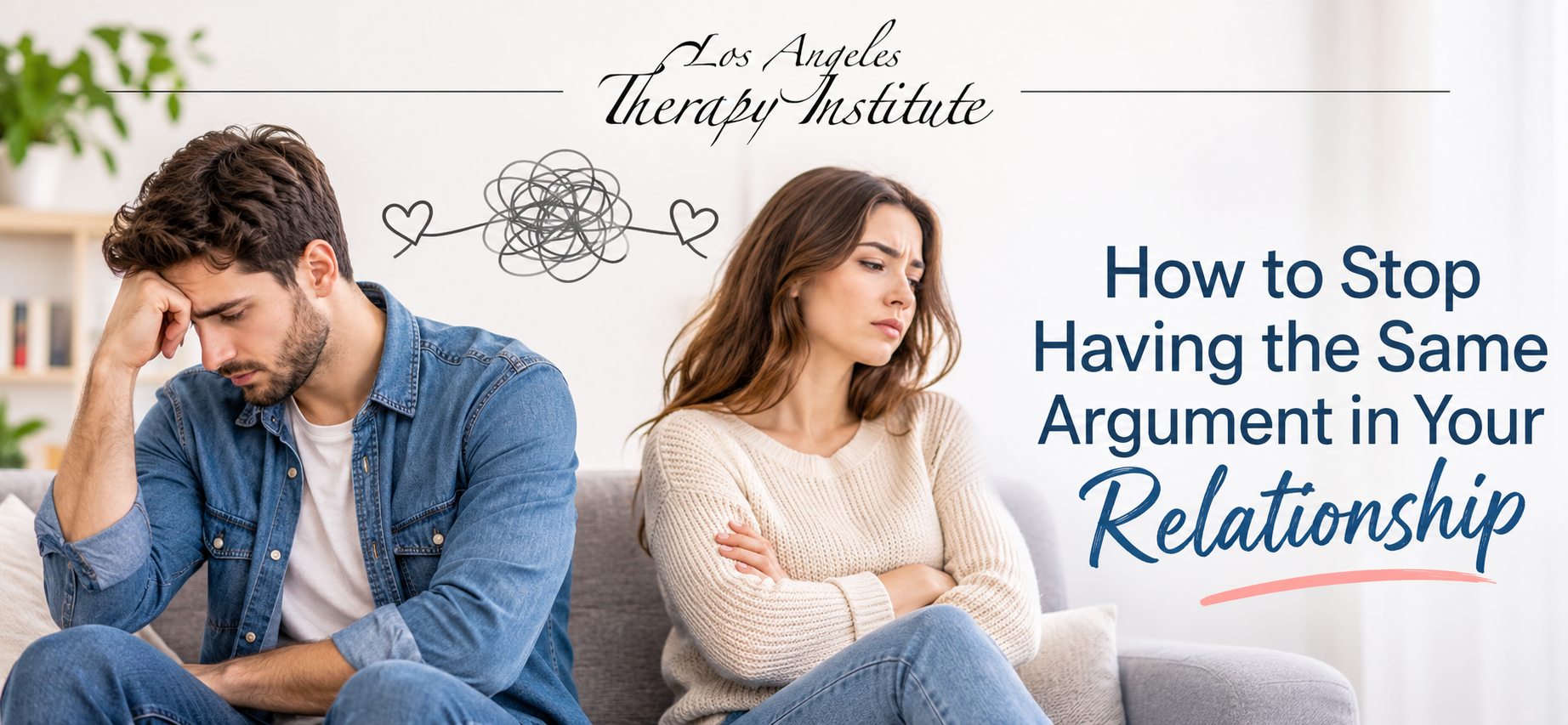
To stop having the same argument, you need to understand what the fight is really about and change how you handle it together.
You’ve probably had a fight and said, “I promise next time it’ll be different” and a few days later you’re back in the same situation. It’s exhausting, and it can leave you both feeling unheard or far apart. The Gottman Method for couples therapy offers a practical way to understand these repeating patterns and talk about hard things more calmly.
At Los Angeles Therapy Institute, we help couples look beneath the repeated disagreements, understand each other’s side, and have more productive conversations.
Objective: This guide explains why couples repeat the same arguments, how the Gottman Method approaches conflict, and what you can try right now to change the pattern.
Table of Contents
Key Takeaways
- Repeated arguments are often about an unmet need or a difference in expectations, not just the topic on the table.
- Spotting your pattern helps you respond thoughtfully instead of reacting on autopilot.
- The Gottman Method helps couples build a stronger friendship, handle conflict better, grow closer emotionally, and repair things after they’ve hurt each other.
- Hard conversations are easier if you identify a specific concern, listen without interruption, and take breaks when you’re overwhelmed.
- Some differences never fully go away. They need ongoing understanding and a bit of give and take, not one permanent fix.
- Couples therapy gives you a safe space to practice talking and listening better, with someone guiding you along the way.
Why Do Couples Keep Having the Same Argument?
Usually because the real issue underneath never got dealt with, even when the fight itself ended. A talk about chores, money, family, or time together often carries bigger feelings about fairness, trust, or feeling valued.
Here’s an example. One partner feels hurt when the other works late again. On the surface, the argument is about time. Underneath, it’s about feeling disconnected. Meanwhile, the other partner feels criticized for trying to meet responsibilities at work.
Common reasons the same argument comes back:
- Unspoken expectations: Each of you assumes the other should just know what you need
- Different communication styles: One of you wants to talk right away, and the other needs time to think
- Defensiveness: Feedback feels like an attack, so the talk turns into a contest over who’s right
- Unresolved hurt: Old arguments resurface because the pain was never fully addressed
- Different priorities: You may truly value different things, even when you both care about the relationship
Instead of asking, “Why are we fighting about this again?” try asking, “What does this issue mean to each of us?” That small shift can move you from blaming each other to seeing the pattern you’re both caught in.
How Does the Gottman Method for Couples Therapy Help?
It gives you a structured way to understand your patterns and build better habits, instead of expecting you to agree on everything. The approach was developed by Drs. John and Julie Gottman. It uses relationship assessment and research-informed tools to help couples strengthen their friendship, handle conflict, deepen intimacy, and repair past hurts. You can read more at The Gottman Institute.
What Communication Habits Should Couples Watch For?
The Gottman Institute describes four harmful conflict patterns, known as the “Four Horsemen”:
- Criticism: Attacking the character of your partner, rather than describing a specific concern
- Contempt: Showing disrespect through insults, ridicule, or mocking
- Defensiveness: Answering a concern by shifting blame or making excuses
- Stonewalling: Pulling away and going quiet, often when you feel overwhelmed
Noticing these habits isn’t about deciding who’s the problem. It’s about spotting what makes talks harder and learning what to do instead.
For example, instead of saying, “You never care about what I need,” try: “I felt hurt when we canceled our plans. Can we talk about making more time for each other?” The second version describes a specific experience and opens the door to a conversation without assigning blame.
What Can You Do Differently During an Argument?
Start small. You can’t prevent every disagreement, but you can change how you handle them. Try these four steps:
- Start with the actual concern. Say what happened and how it affected you, rather than judging your partner’s character.
- Instead of: “You never listen to me.”
- Try: “I felt rejected as I was recounting what happened earlier. Could you hear me out before responding?”
- Listen to understand, not just to reply. Before defending yourself, say back what you think your partner means. For example: “Are you feeling left out because we haven’t spent much time together this week?” If they correct you, that’s helpful. The idea is to understand their experience and not necessarily agree with every bit of it.
- Take a break when it gets overwhelming. If either of you is too upset to listen, pause and agree on a time to come back. Don’t use the break to avoid the issue for good. You might say: “I want us to work this out, but I’m too overwhelmed to talk well right now. Can we put this on hold and go over it later?”
- Look for one practical change. Not every recurring problem has a perfect solution. Ask yourselves:
- What part of this can we change?
- What would help each of us feel heard?
- What’s one realistic agreement we can try this week?
Small agreements give you something concrete to check in on, instead of repeating the same talk with no plan.
When Can Couples Therapy Help?
When recurring arguments are hurting your connection, making everyday decisions hard, or leaving one of you feeling unheard. You don’t have to wait for a crisis.
Couples therapy for arguing gives you a space to look at the pattern behind your disagreements, say what you need more clearly, and practice approaches that fit your relationship.
Los Angeles Therapy Institute describes using the Gottman Method alongside approaches like attachment-based therapy, cognitive behavioral therapy (CBT), and dialectical behavior therapy (DBT), depending on the concerns being addressed.
If you are considering couples therapy in Santa Monica, couples therapy in Beverly Hills, CA, or looking for a couples therapist in Orange County, review the practice’s location and service information before booking. Ask about the therapist’s approach, how sessions are structured, and whether the available appointments fit your needs.
The right fit matters. Both of you should get a chance to share your side, understand the process, and talk about your goals.
Build a Different Pattern Together
Having the same argument again and again doesn’t mean your relationship is beyond help. It may mean you need a different way to understand the issue, share what you need, and respond when emotions run high. Couples can learn to move from automatic reactions to more meaningful interactions with patience and practice. If you’re struggling to reconnect because of ongoing conflict, Los Angeles Therapy Institute can help with our couples therapy services and discuss whether the Gottman Method may be a good fit.
Frequently Asked Questions
Is it normal for couples to argue about the same things?
Yes. Recurring disagreements are really common, especially when partners have different needs, values, or expectations. If they keep causing distress or chipping away at trust, it’s worth looking at the pattern underneath.
Can the Gottman Method stop recurring arguments?
It offers tools to help you understand your patterns, communicate more constructively, and repair hurt. Results vary, and it can’t promise that every disagreement will stop.
How can I stop an argument from escalating?
Describe your concern without attacking your partner, listen to their side, and take an agreed break if either of you gets overwhelmed. Come back to the conversation when you can talk more calmly.
Do both partners need to attend couples therapy?
Couples therapy usually means both of you working with a therapist together. Whether it’s right for you depends on your situation, your safety, and what you hope to get out of it, and a qualified professional can help you talk that through.
How do we choose a couples therapist?
Look for someone whose training and style fit what you’re dealing with. It’s fine to ask how they handle recurring conflict, what a session looks like, and whether they use the Gottman Method or another approach that suits your goals.