
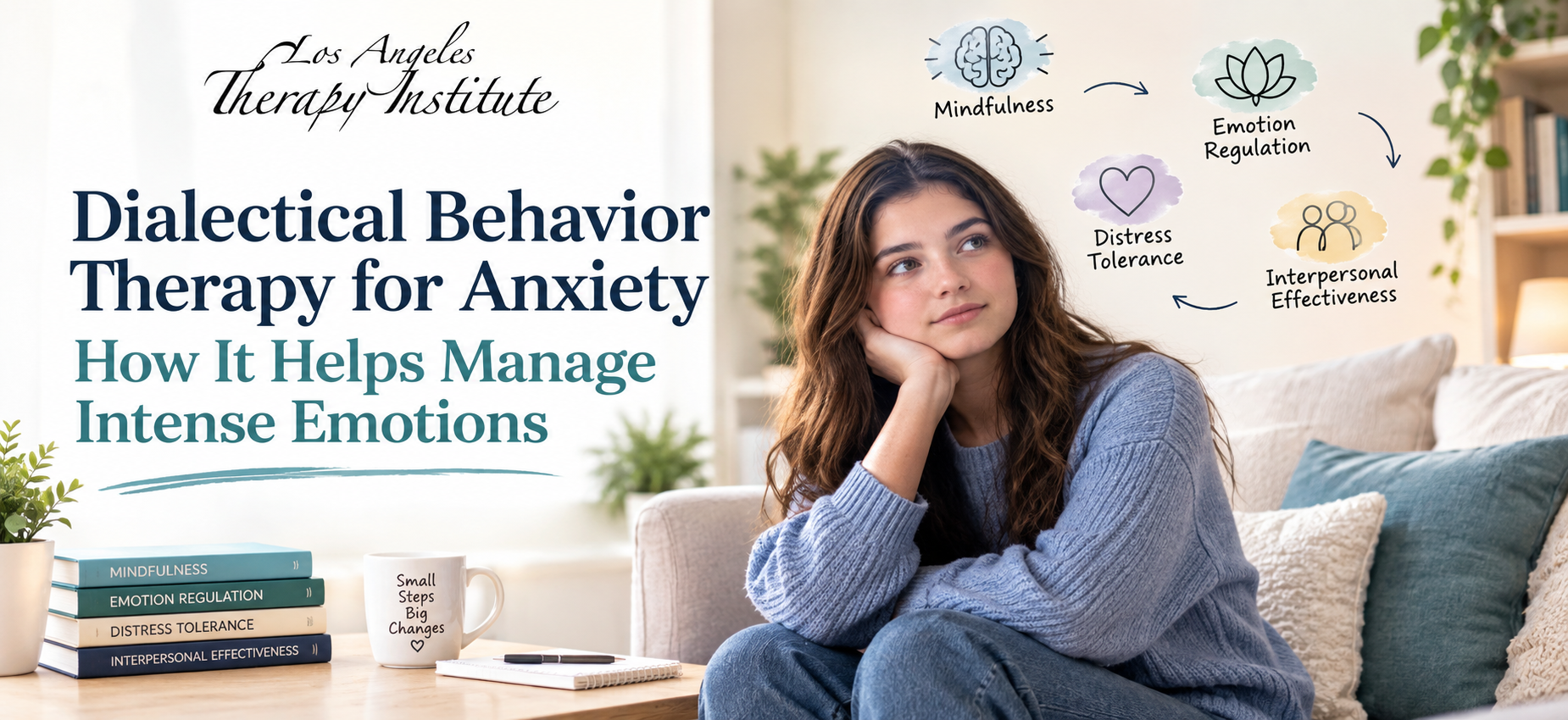
When anxiety feels like it hijacks your whole body, racing heart, spiraling thoughts, the urge to either shut down or explode, dialectical behavior therapy for anxiety is built specifically to bring that intensity back down to a manageable level.
Anxiety disorders affect over 40 million adults in the U.S., and for a large share of them, the problem isn’t just the worry itself. It’s how fast and how big the emotional reaction gets once anxiety kicks in. That’s where dialectical behavior therapy for anxiety does something other approaches don’t: it teaches you to ride out the wave instead of getting pulled under by it.
Originally built for a different diagnosis, DBT has become one of the most effective tools available for anxiety that feels bigger than the situation calls for. Here’s how it actually works.
Objective: To explain how dialectical behavior therapy for anxiety works, why it’s effective for intense or fast-escalating emotional responses, and how to know if it fits your situation, with guidance from the clinical team at Los Angeles Therapy Institute.
Table of Contents
Key Takeaways
- Dialectical behavior therapy for anxiety combines acceptance and change, you learn to accept the emotion in the moment while also building skills to shift it.
- DBT teaches four core skill sets: mindfulness, distress tolerance, emotion regulation, and interpersonal effectiveness.
- It’s especially effective when anxiety comes with intense physical reactions, panic, or emotional outbursts that feel hard to control.
- Most DBT programs combine weekly individual sessions with skills training, often over 6 months or longer for lasting change.
- DBT isn’t only for crisis-level symptoms, it also helps with everyday anxiety that escalates faster than it should.
Clinically reviewed for accuracy by the therapy team at Los Angeles Therapy Institute.
Why Anxiety Sometimes Needs More Than CBT Alone
Cognitive behavioral therapy works well for anxiety rooted in specific thought patterns, catastrophizing, all-or-nothing thinking, worry loops. But for some people, anxiety doesn’t stay contained in their thoughts. It floods the body first.
A racing heart before a meeting. A panic response that hits before the anxious thought even fully forms. Snapping at a partner because the emotional pressure built up faster than it could be processed. This is where DBT adds something CBT alone often can’t: tools built specifically for moments when emotion outpaces logic.
DBT was developed by Dr. Marsha Linehan for people whose emotions escalate quickly and intensely. Anxiety at that intensity responds well to the same skill set.
What Is Dialectical Behavior Therapy?
Dialectical behavior therapy for anxiety is a structured, skills-based therapy built on one central idea: you can accept where you are right now and still work toward change. Those two things aren’t in conflict, that’s the “dialectical” part.
DBT is organized around four skill modules:
- Mindfulness, staying grounded in the present moment instead of getting pulled into anxious “what if” spirals.
- Distress tolerance, getting through an intense anxious moment without making it worse through avoidance, outbursts, or panic-driven decisions.
- Emotion regulation, understanding what’s fueling the anxiety and learning to shift it before it takes over.
- Interpersonal effectiveness, communicating needs and setting boundaries without the anxiety spike that often comes with conflict.
Sessions combine one-on-one therapy with structured skills practice, often in a class-like format, so the tools become second nature rather than something you have to remember in the moment.
How DBT Skills Target Anxiety Specifically
Anxiety isn’t one thing, it shows up differently depending on the person, and DBT skills map onto the different ways it takes hold.
Physical panic responses
Distress tolerance skills, like paced breathing and grounding techniques, are designed for the exact moment anxiety spikes, not hours later when you’re calm enough to reflect.
Anticipatory worry
Mindfulness practice interrupts the habit of living three steps ahead in your head. Instead of rehearsing worst-case scenarios, you practice staying with what’s actually happening right now.
Anxiety around relationships or conflict
For people whose anxiety flares hardest in social or relational situations, interpersonal effectiveness skills teach how to ask for what you need or say no without the anxious over-explaining that often follows.
Many clients pair DBT with cognitive behavioral therapy for health anxiety when physical symptoms and health-related worry are part of the picture, the two approaches work well together rather than competing.
Who Benefits Most From DBT for Anxiety
DBT tends to be the right fit when:
- Anxiety comes with intense, fast-building emotional reactions
- Panic attacks or physical symptoms are part of the pattern
- Past attempts at therapy focused only on thoughts, without addressing the emotional intensity itself
- Anxiety is tangled up with difficulty managing anger, sadness, or relationship conflict
- You’ve noticed the anxiety response feels bigger than the situation seems to call for
It’s also worth considering if standard talk therapy has helped some, but hasn’t touched the intensity of the emotional spikes themselves.
Not sure if DBT or another approach fits your situation best? Talk to a therapist for depression and anxiety in Los Angeles with a free consultation.
What a DBT Program Actually Looks Like
A full DBT program is more structured than typical talk therapy, and that structure is part of why it works.
- Individual therapy. Weekly sessions focused on applying DBT skills to your specific situation and tracking patterns over time.
- Skills training. Group or structured sessions that walk through the four skill modules in a practical, hands-on way.
- Between-session practice. You’ll track emotional responses and practice specific skills outside of sessions, this is where most of the actual change happens.
- Coaching support. Many DBT programs include brief check-ins between sessions for real moments of high anxiety, not just scheduled appointments.
A full course typically runs six months or longer, since the goal is skills that hold up under real pressure, not just insight that fades once the session ends.
DBT vs. CBT for Anxiety
| Factor | CBT | DBT |
| Best for | Anxious thought patterns, worry loops | Intense, fast-escalating emotional reactions |
| Structure | Individual sessions | Individual sessions + skills training |
| Core focus | Challenging and reframing thoughts | Balancing acceptance with skill-building |
| Physical symptoms | Addressed through behavioral techniques | Directly targeted with distress tolerance skills |
| Typical length | 8–16 sessions | 6+ months |
Neither approach is universally “better.” Many clients start with CBT and add DBT skills when anxiety includes strong physical or emotional intensity that CBT alone hasn’t fully addressed. Our clinicians also offer stress management therapy in Los Angeles for clients whose anxiety is tied more closely to daily overwhelm than a specific diagnosis.
Ready to find the right approach for your anxiety? Book a free consultation with Los Angeles Therapy Institute.
The Bottom Line
Anxiety that hits fast and hits hard doesn’t always respond to thinking your way out of it. Dialectical behavior therapy for anxiety gives you tools built for the moment the emotion takes over, not just the thoughts that come after.
If intense anxiety has been running the show longer than you’d like, schedule a free consultation with Los Angeles Therapy Institute and find an approach built for how your anxiety actually shows up.
Frequently Asked Questions
Is DBT only for people with Borderline Personality Disorder?
No. DBT was originally developed for BPD, but it’s now widely used for anxiety, depression, PTSD, and anyone whose emotions escalate quickly and intensely.
How is DBT different from just learning breathing exercises?
Breathing techniques are one small piece of distress tolerance, which is one of four DBT skill modules. The full approach also addresses the thought patterns and relationship dynamics feeding the anxiety.
How long does DBT take to work for anxiety?
Some people notice a difference in how they handle anxious moments within a few weeks of starting distress tolerance skills. Deeper, lasting change typically takes several months of consistent practice.
Do I need group sessions, or can DBT work one-on-one?
Full DBT programs include both individual and group skills training, but many people start with individual sessions that incorporate DBT skills, especially if group format doesn’t fit their schedule or comfort level.
Can DBT help with panic attacks specifically?
Yes. Distress tolerance skills are designed for exactly this, getting through an intense physical anxiety response without it escalating further or leading to avoidance.
Is DBT covered by insurance?
Most major insurance plans cover DBT when delivered by a licensed provider. Our team can verify your specific coverage before your first session.