
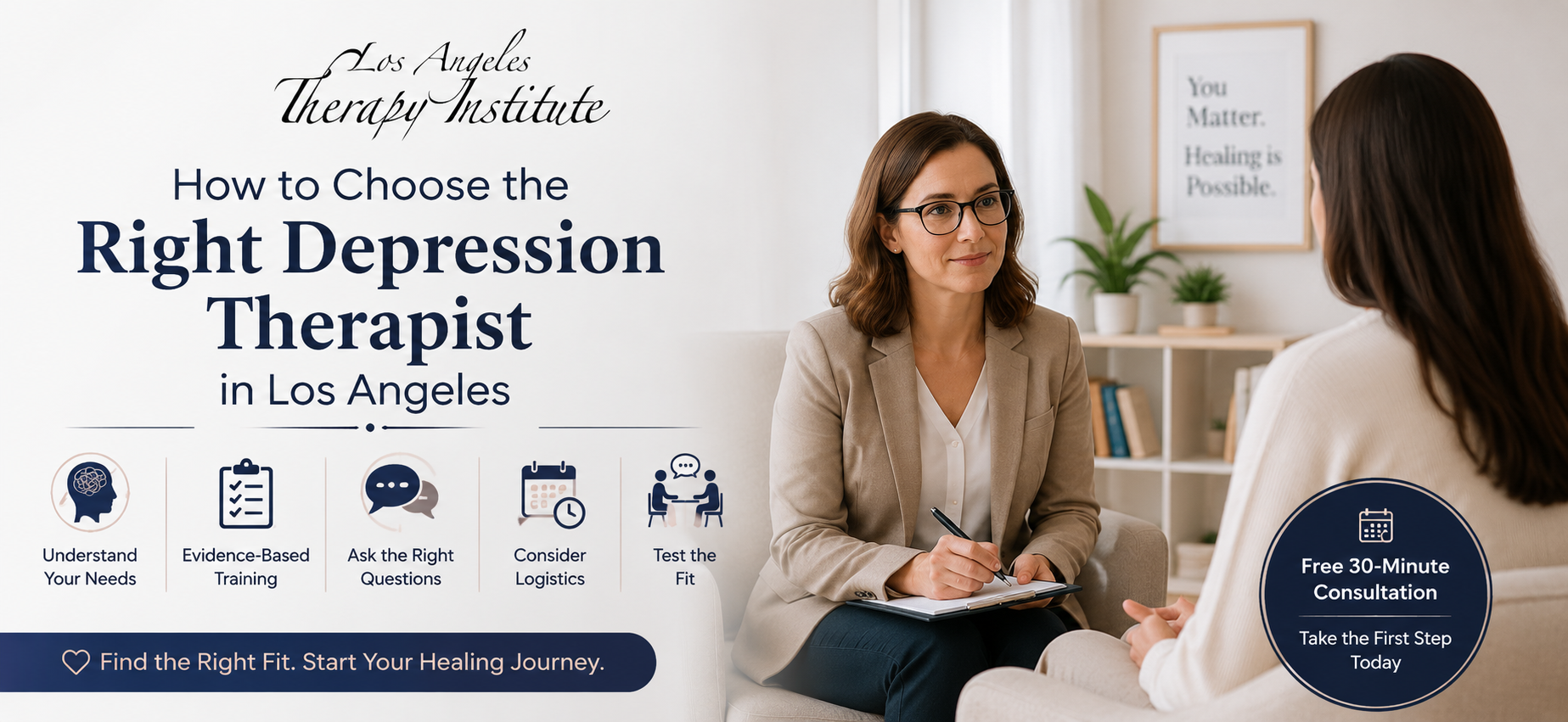
Googling “therapist for depression Los Angeles” returns a wall of near-identical profiles. Warm photo, calm bio, a list of specialties that reads almost the same from one page to the next.
That sameness makes the actual decision harder, not easier. Depression isn’t one thing, and the therapist who helped a friend snap out of a rough patch might not be the right match for what you’re carrying.
This guide breaks down what actually matters when choosing the best therapist for depression, so the decision feels less like a guessing game.
Objective: Help people searching for a therapist for depression in Los Angeles understand what actually matters when choosing one, so they end up with someone who fits instead of the first name in a search result.
Table of Contents
Key Takeaways
- Finding the best therapist for depression starts with checking training in evidence-based approaches, not just general licensure.
- Depression shows up differently for everyone, so a therapist’s specific experience with your symptoms matters more than years in practice alone.
- A therapist for depression in Los Angeles should be able to explain their approach clearly during a first conversation, not just list credentials.
- Fit with a therapist affects outcomes as much as the method they use.
- A free consultation is one of the most reliable ways to test that fit before committing to ongoing sessions.
- Los Angeles Therapy Institute offers a free consultation and therapists trained in CBT, mindfulness-based approaches, and TMS for treatment-resistant cases.
Why Choosing the Right Therapist Matters More Than People Think
Therapy outcomes depend heavily on the relationship between client and therapist, not just the technique on paper. Two therapists using the exact same method can produce very different results depending on how well they connect with a particular client.
This matters even more with depression, since low motivation and self-doubt often make it harder to keep showing up. A mismatched therapist gives depression an easy excuse to skip the next session. A good fit makes staying consistent feel less like a chore.
The goal isn’t finding a therapist with the most impressive title. It’s finding one whose approach and personality actually work for you.
Step 1: Understand What Kind of Depression You’re Dealing With
Depression doesn’t look the same for everyone, and naming your specific experience helps narrow the search considerably.
Some common patterns:
- Persistent low mood that’s lasted weeks or months without a clear cause
- Depression tied to a specific event, like a loss, breakup, or job change
- Seasonal patterns, where mood dips at certain times of year
- Depression alongside anxiety, which is extremely common and often needs a combined approach
- Treatment-resistant depression, where previous therapy or medication hasn’t helped much
Knowing which of these fits you best helps you ask sharper questions when you start reaching out to therapists.
Step 2: Check for Evidence-Based Training
Licensure is the baseline. Every legitimate therapist should hold one: LMFT, LCSW, PsyD, or PhD. That part isn’t up for debate.
What separates a good fit from an average one is training in approaches with real research behind them. Look for mentions of:
- Cognitive Behavioral Therapy (CBT), which addresses the thought patterns that keep depression circling.
- Mindfulness-Based Cognitive Therapy, often used to prevent depression from returning after it lifts.
- Acceptance and Commitment Therapy (ACT), useful for building a life that moves forward alongside difficult feelings rather than waiting for them to disappear first.
A therapist who can name their specific approach, rather than describing it vaguely, is usually a good sign they’ve actually trained in it.
Step 3: Ask About Their Approach, Not Just Their Credentials
A bio page tells you what a therapist studied. It rarely tells you what a session with them actually feels like.
Good questions to ask before booking:
- What does a typical session with you look like?
- How do you usually measure whether someone’s improving?
- Have you worked with clients who’ve tried therapy before without much success?
- What happens if this approach doesn’t feel like it’s working after a few weeks?
A therapist who answers these clearly and directly, without vague reassurance, is usually easier to trust with something as personal as depression treatment.
Step 4: Consider Logistics That Actually Affect Consistency
The most qualified therapist in the city won’t help much if getting to appointments becomes its own source of stress. Depression already makes consistency hard. Don’t make it harder with poor logistics.
Worth checking before committing:
- Location and commute. A long drive across LA traffic can quietly discourage weekly sessions.
- Online session availability. Useful for weeks when getting to an office isn’t realistic.
- Insurance coverage. Confirm what your plan actually covers before your first session, not after.
- Scheduling flexibility. Evening or weekend availability matters if you’re working full-time.
Los Angeles Therapy Institute offers both in-person and online sessions, along with acceptance of several major insurance plans, including Aetna, Cigna, UnitedHealthcare, and Medi-Cal.
Step 5: Use a Consultation to Test the Fit
A short consultation call reveals more than any website ever will. It’s the fastest way to know whether a therapist’s style actually works for you before spending money on a full session.
During a consultation, pay attention to:
- Whether you feel comfortable talking, even briefly
- Whether they ask thoughtful questions instead of just describing their own approach
- Whether their answers feel specific to you, not generic
Los Angeles Therapy Institute offers a free consultation, giving you a chance to ask direct questions and get a real sense of fit before committing to ongoing sessions.
When Standard Therapy Isn’t Enough
For some people, talk therapy alone doesn’t fully resolve depression, especially after trying multiple therapists or medications without much relief. That doesn’t mean nothing will work. It usually means it’s time to look at additional options.
Transcranial Magnetic Stimulation (TMS) is one option worth knowing about. It’s a non-invasive treatment that uses magnetic fields to stimulate areas of the brain involved in mood regulation, and it doesn’t require medication or come with the systemic side effects some antidepressants carry. A typical course runs four to six weeks, with sessions lasting 30 to 60 minutes.
TMS isn’t the starting point for most people, but it’s a meaningful option for those who’ve tried standard treatment without the results they hoped for. A good therapist for depression should be able to discuss whether this, or a referral for one, makes sense for your specific situation.
Los Angeles Therapy Institute offers TMS therapy alongside traditional talk therapy, so treatment can adjust if standard sessions alone aren’t moving the needle.
Ready to Start Looking?
Finding the right therapist doesn’t have to feel like another item on an already overwhelming list. Getting clear on what you need, checking a few credentials, and using a free consultation to ask direct questions gets you most of the way there.
Los Angeles Therapy Institute offers therapy for depression and anxiety tailored to your specific situation, along with individual therapy sessions built around real, practical progress. Book a free consultation to find a therapist who’s actually the right fit.
Frequently Asked Questions
How do I choose the right depression therapist in Los Angeles?
Look for a licensed therapist with experience treating depression and training in evidence-based approaches such as CBT. During an initial consultation, ask about their treatment style, experience, goals, and how they measure progress.
What questions should I ask a depression therapist before starting therapy?
Ask about their qualifications, experience with depression, treatment approach, expected progress, session format, fees, insurance, and what they recommend if treatment is not helping. These questions can help you determine whether the therapist is a good fit.
Is CBT effective for depression?
Cognitive Behavioral Therapy (CBT) is a widely used evidence-based approach for depression. A qualified therapist can determine whether CBT or another therapeutic approach best matches your symptoms, goals, and circumstances.
How do I know if my depression therapist is a good fit?
You should feel comfortable communicating openly and feel that your therapist listens to your concerns and understands your goals. A consultation can help you assess rapport, communication style, and whether their approach feels appropriate for you.
What can I do if therapy isn't helping my depression?
Talk with your therapist about your progress and whether the treatment approach should be adjusted. For treatment-resistant depression, additional options such as Transcranial Magnetic Stimulation (TMS) may be considered with an appropriate mental health professional.
Medical Disclaimer
This content is for informational purposes only and is not a substitute for professional medical advice, diagnosis, or treatment. If you are experiencing depression or other mental health concerns, consult a qualified mental health professional for personalized guidance. If you are in immediate danger or experiencing a mental health emergency, contact 911 or a local crisis service.